
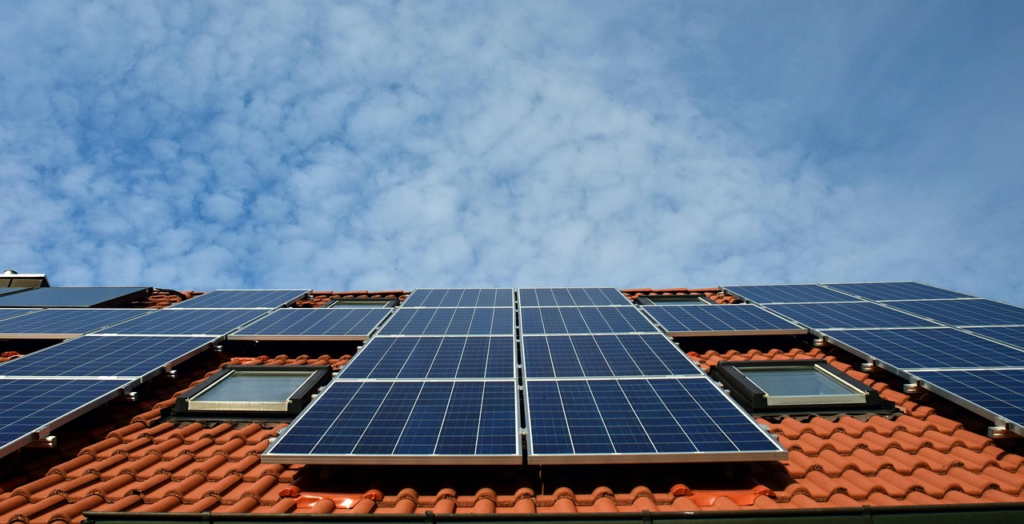
Want to reduce electricity costs and your carbon footprint?
Delaware is the second-smallest state, but don’t be fooled by the size. Delaware solar incentives are some of the best in the U.S., and home owners in Delaware are jumping on the opportunity.
Here’s the thing…
Solar installation costs in Delaware can be cut by almost 50% by following a few smart steps. And when you throw in energy bill savings month after month, the math really starts to get interesting.
Here’s what you can expect to learn:
- Why Delaware Solar Incentives Are Important
- The Delaware Solar Installation Process
- The Most Important Financial Benefits
- How Net Metering Helps You Save Money
Why Delaware Solar Incentives Are Important
Delaware is a state that knows how to get serious about clean, renewable energy. Under the state’s Renewable Portfolio Standard, 40% of electricity must be generated from renewable sources by 2035. That’s a full 10% just from solar!
That’s a lot of rooftops.
In order to meet these goals, Delaware has some of the most competitive Delaware solar rebates and incentive programs in the region. These Delaware solar incentives really do the heavy lifting of offsetting upfront costs to make clean energy more accessible than ever.
Here’s what sets Delaware apart:
Delaware is able to stack federal tax credits, state grants, and utility rebates on top of each other to offer a trifecta of savings for homeowners that when combined maximize the potential return on investment.
The Solar Energy Industries Association shows that as of right now there is a total of 305 MW of solar installed in Delaware that’s enough to power over 36,700 homes. These numbers are only going to continue to increase.
The Delaware Solar Installation Process
Installing solar panels on your home is pretty simple. The typical path takes a few weeks to a couple of months.
Step 1: Assessment
Your solar installer will evaluate your home. This is when they’ll check your roof’s suitability, your energy needs, and the best system size for your situation. Most homes need a system in the 8-10 kW range to offset their electric bill completely.
Step 2: System Design and Permitting
Once the assessment is complete, the installer will design a custom system to meet your needs. They also manage all the permitting requirements through your local municipality. Delaware has good interconnection standards making this process easy.
Step 3: Installation Day
The actual installation typically takes one to three days. The installation crew mounts the panels, sets up the inverter, and wires everything up to your electrical system.
Step 4: Inspection and Grid Connection
After your system is installed, a local inspector comes out to verify the work meets all code requirements. After inspection, your utility connects you to the grid and activates your net metering account.
Easy enough, right?
The Most Important Financial Benefits
This is where it gets fun…
Delaware has a number of different financial incentives that help reduce the overall cost of solar for you. Learning each one can help you maximize your return.
Federal Solar Tax Credit
The federal Residential Clean Energy Credit is a tax credit that allows you to deduct 30% of your total solar installation cost from your federal taxes. For an average Delaware system that costs around $29,000 that’s about $8,700 back in your pocket.
Important: The federal tax credit is scheduled to expire after December 31, 2025. The time to get solar is now.
Delaware Green Energy Program
Delaware has a Green Energy Program that works with local utilities to provide solar grants to residents. The program works differently depending on which utility you get power from.
- Delmarva Power: Delaware’s largest utility offers up to $6,000 in rebates which is ($0.70 per watt) to homeowners.
- Delaware Electric Cooperative: Offers $0.50 per watt for the first 5 kW.
- DEMEC municipalities: Offers $1.00 per watt for the first 5 kW.
These are grants, so you get them right off your installation cost. No waiting on tax season.
Solar Renewable Energy Credits (SRECs)
Ok, here’s one of the little known benefits you should understand…
Delaware also has a system in place that allows you to sell SRECs generated by your solar panels. For every megawatt-hour of electricity your panels produce you earn one SREC. Auctions have recently been averaging between $30-43 per SREC for the first ten years.
On a typical residential 8 kW system that equates to roughly $325 a year of extra income for simply making clean electricity.
How Net Metering Helps You Save Money
Net metering is the secret sauce of solar savings in Delaware.
If your panels produce more electricity than you use, that extra power flows back to the grid and your utility credits you for every kilowatt-hour (kWh) at the full retail rate.
Here’s how it works:
During peak summer months your system is making excess energy. Your system will generate those credits for use during the winter or any cloudy days. At the end of each 12-month cycle you can even request payment for any balance.
Delaware’s net metering policy is some of the best in the country for consumers. It’s one of the best ways to turn your roof into a money-savings machine.
How to Choose the Right Installation Partner
Solar installers aren’t all made the same.
Delaware’s Green Energy Program has a list of approved contractors who meet specific quality standards. It’s important to work with one of these approved installers to ensure you get professional workmanship and qualify for state rebates.
Here are some tips for choosing the right installer:
- Proper licensing and insurance
- Experience with the specific incentive programs in Delaware
- Strong customer reviews and references
- Transparent pricing and no hidden fees
- Comprehensive warranties and coverage
A reputable installer takes care of all the paperwork for incentives, permitting, and utility interconnection. They make it all easy.
Solar Options for Low-Income Delaware Residents
Delaware also has solar incentives for Delaware residents who may need just a little extra assistance.
The Low- to Moderate-Income Solar Pilot Program is available to qualifying Delaware households to provide free or reduced-cost solar panel installation. Low-income Delaware families can get a complete 4 kW system for free through the Weatherization Assistance Program.
Moderate-income Delaware households only pay 30% of system costs while the program covers the remaining 70%.
It’s all about making sure solar energy is available to all Delawareans.
Summary: Solar Panels in Delaware Are Worth It
Delaware solar incentives make getting solar one of the smartest financial decisions you can make as a homeowner. Combine the 30% federal tax credit, competitive state grants, and the ongoing SREC payments and the savings really add up.
The entire process is simple when you work with a quality contractor. Net metering also credits you back at full retail rates for as long as you own the system. It pays for itself in 7-12 years and then keeps churning out returns for 25 years or more.
The only catch is…
The federal tax credit is expiring at the end of 2025. If you wait you may be losing out on thousands in savings. If solar energy is on your radar, the time to get it is now.
Talk to multiple approved installers, compare your options, and start cashing in on Delaware’s generous solar incentives.