
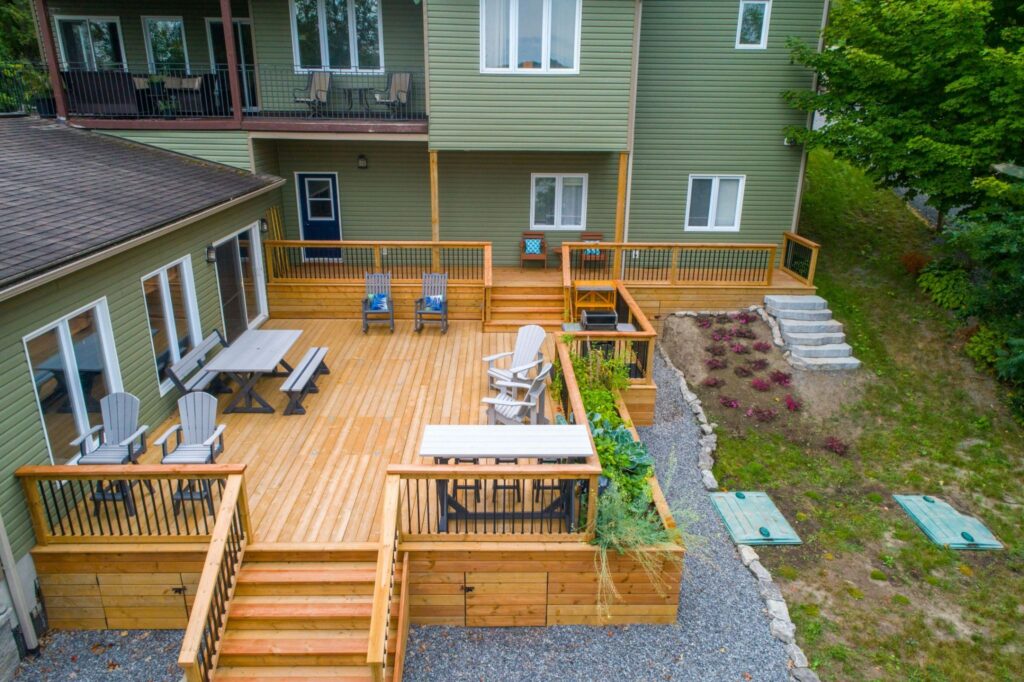
Planning a new deck is one of the most fun home projects you can do.
It’s also one of the easiest to get wrong.
A great deck provides years of family memories and serious value to your home. A poorly planned one will cost you thousands in repairs. The good news? With a little planning, you can sidestep the common mistakes and build a deck that lasts for decades.
Here’s exactly how to do it…
What you’ll find inside:
- Why Deck Planning Matters More Than You Think
- Choosing The Right Decking Material
- Designing A Deck That Fits Your Lifestyle
- Smart Features That Add Real Value
- Hiring The Right Deck Builder
Why Deck Planning Matters More Than You Think
A deck isn’t just a flat surface in your backyard.
It’s an extension of your living space. And homeowners are taking note. In fact, it is estimated that 41 million residential and commercial decking installations worldwide use composite boards, which is a clear indication that people are willing to invest in their outdoor spaces.
Here’s why planning matters:
- Cost control: A clear plan stops you from making expensive changes mid-build.
- Longevity: The right materials can extend your deck’s lifespan by decades.
- Usability: A well-planned deck actually gets used instead of collecting leaves.
- Value: A great deck can boost your home’s resale price significantly.
Without the planning stage, you’ll get a deck that’s fine on day one but fails by year five. Hiring professional deck builders serving La Grange is one of the smartest decisions you can make. If you are thinking about low maintenance decking options, they’ll point you to the right products and designs. They’ll know what materials last through local weather and what layouts actually work for your yard.
Alright, let’s dive into the most important decision you will make…
Choosing The Right Decking Material
This is where most homeowners freeze up.
Simple truth here: the best option is based on budget, climate, and maintenance tolerance. Let’s review the most common:
Pressure-Treated Wood
Pressure-treated wood is still the most common decking material in the US.
Its inexpensive, readily available and a great way to start off for the budget conscious homeowner. However… It requires maintenance. Sealing/staining every year, and occasional board replacement due to rot.
Composite Decking
Composite decking is hands down the fastest-growing option on the market.
Why? It’s simple. Composite decking cuts annual maintenance costs by 48%. Homeowners looking for long term value love it. No more staining. No more sealing. Just hose it down and enjoy.
Composite boards are manufactured from a mix of recycled wood fibres and plastic. This means:
- Resistant to rot and insects
- Fade and stain resistant
- Splinter-free (a huge win for families)
- Available in dozens of colors
PVC Decking
PVC is the premium low maintenance decking option.
It has no wood fibers, so it resists moisture better than any other product available. Pools decks, lakeside homes, and humid climates all are happy with PVC. It costs more initially, but it lasts forever and requires almost no maintenance.
Designing A Deck That Fits Your Lifestyle
Now for the fun part. Designing your deck.
Mistake #2: Big mistake, people design their decks with Pinterest photos, not with the way they are going to use it in mind. Don’t follow their example.
Start by asking yourself these questions:
- How many people will usually be on the deck?
- Will you be cooking or grilling out there?
- Do you want a dining area, a lounge area, or both?
- Will kids or pets be using it regularly?
- How much sun and shade does the space get?
Once you have answers, you can start mapping out zones. A dining zone needs easy access to the kitchen. A lounge zone enjoys the shade. A grill zone has clearance from the house for safety.
Pro tip: Look up as well. A pergola, privacy screen or built-in planters can give your deck the feel of a bona fide outdoor room rather than a simple platform.
Smart Features That Add Real Value
It’s the small touches that take a good deck to a great one. Plus, deck and patio renovations are top-of-mind for 73% of homeowners worldwide, which means they are becoming commonplace.
Here are the features that give you the biggest bang for your buck:
Built-In Lighting
Deck lighting does two things really well. It adds hours of usable time to your day. It also makes your deck safer at night. Stair lights, post cap lights, and recessed floor lights all look amazing.
Quality Railings
Railings serve a safety purpose. But they’re also one of the most prominent features of your deck. Cable railings, glass panels and powder-coated metal can transform your space.
Multi-Level Designs
Work with the slope in your yard, not against it. Multi-level decks have natural “rooms” and are much more visually interesting than one big flat deck.
Integrated Seating & Storage
Incorporated benches and clever concealed storage boxes are space-efficient and provide a more custom, finished look. They are also much less expensive than purchasing coordinated outdoor furniture.
Hiring The Right Deck Builder
This is the step that makes or breaks your entire project.
A good builder will advise you on materials, pull permits and build a deck that will stand the test of time. A bad one will take shortcuts and you’ll have issues popping up a year later.
Here’s what to look for:
- Local experience: They should know your area’s climate and codes inside out.
- Proper licensing and insurance: Never skip this step.
- Real portfolio: Ask to see completed projects, not just renderings.
- Clear contracts: Everything should be in writing including timelines and payment schedules.
Get at least three quotes before making a decision. The lowest price is not necessarily the best choice. Seek out the builder who asks the most questions about how you plan to use the deck, rather than the one who returns the quickest estimate.
The Bottom Line
Building a deck is a big investment, but it doesn’t have to be stressful.
Homeowners who wind up with fantastic decks are the ones who take the time to plan. They choose materials that fit their lifestyle. They design with the way they live in mind. And they hire builders who care about the end result.
To recap what you’ve learned:
- Plan your deck based on real usage, not just looks
- Pick materials that match your maintenance tolerance
- Design zones that fit your lifestyle
- Invest in smart features that boost value
- Hire a builder with local experience
Do these five things right and you’ll have a deck your family will enjoy for decades. Your deck should be a place you love, not a project you dread.