
Ask any homeowner about their biggest pet peeves with daily living, and a messy bathroom vanity almost always cracks the top five. You know the drill. You start the week with a clear counter, but within three days, it’s covered. Serums, cleansers, prescription bottles, electric razors, contact lens solution, and loose hair ties somehow migrate to the edges of the sink. In tight urban apartments or busy family homes, this isn’t just an aesthetic issue—it turns every single morning routine into an annoying obstacle course.
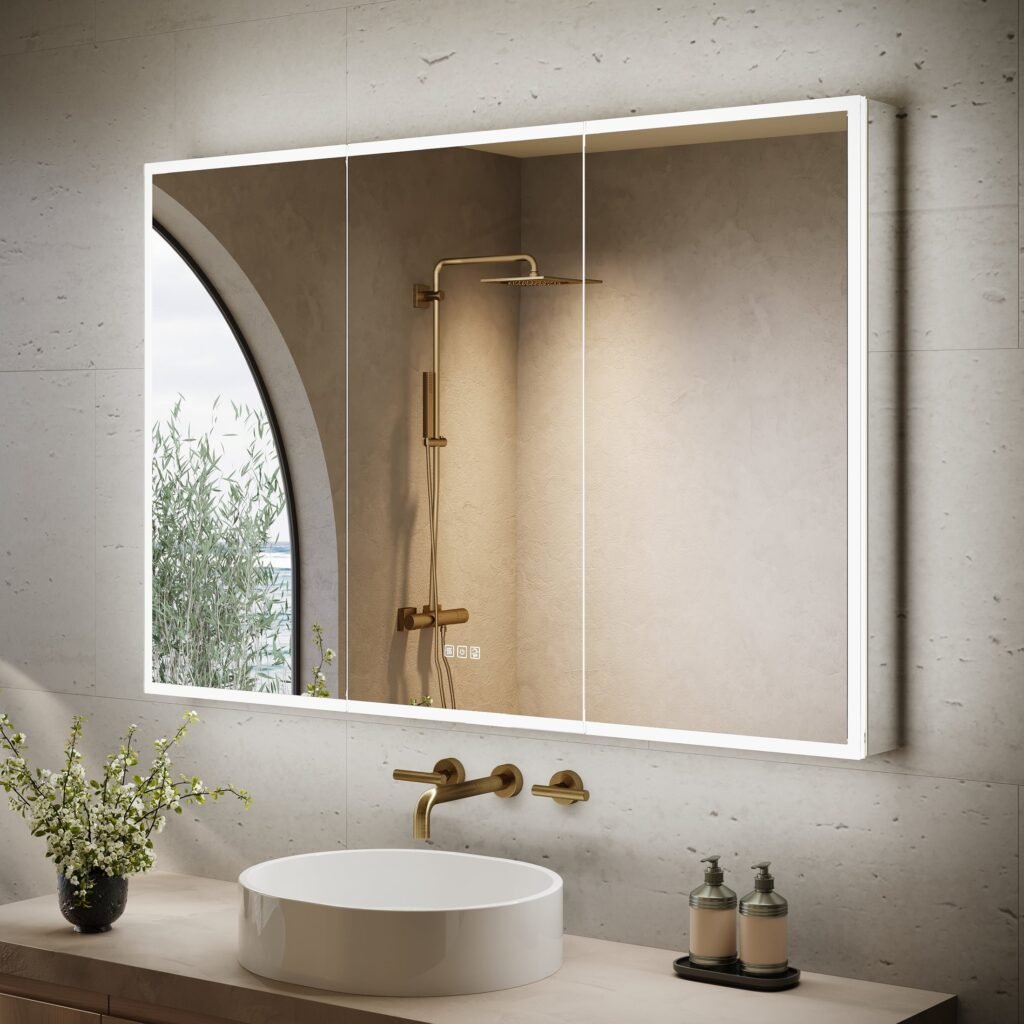
For years, the standard fix was simple: buy another plastic organizer, toss in a few wicker baskets, or just try harder to put things back in the lower drawers. But lately, residential designers and homeowners are looking at the problem through a different lens. They’re swapping out traditional flat mirrors for medicine cabinet with lighted mirror.
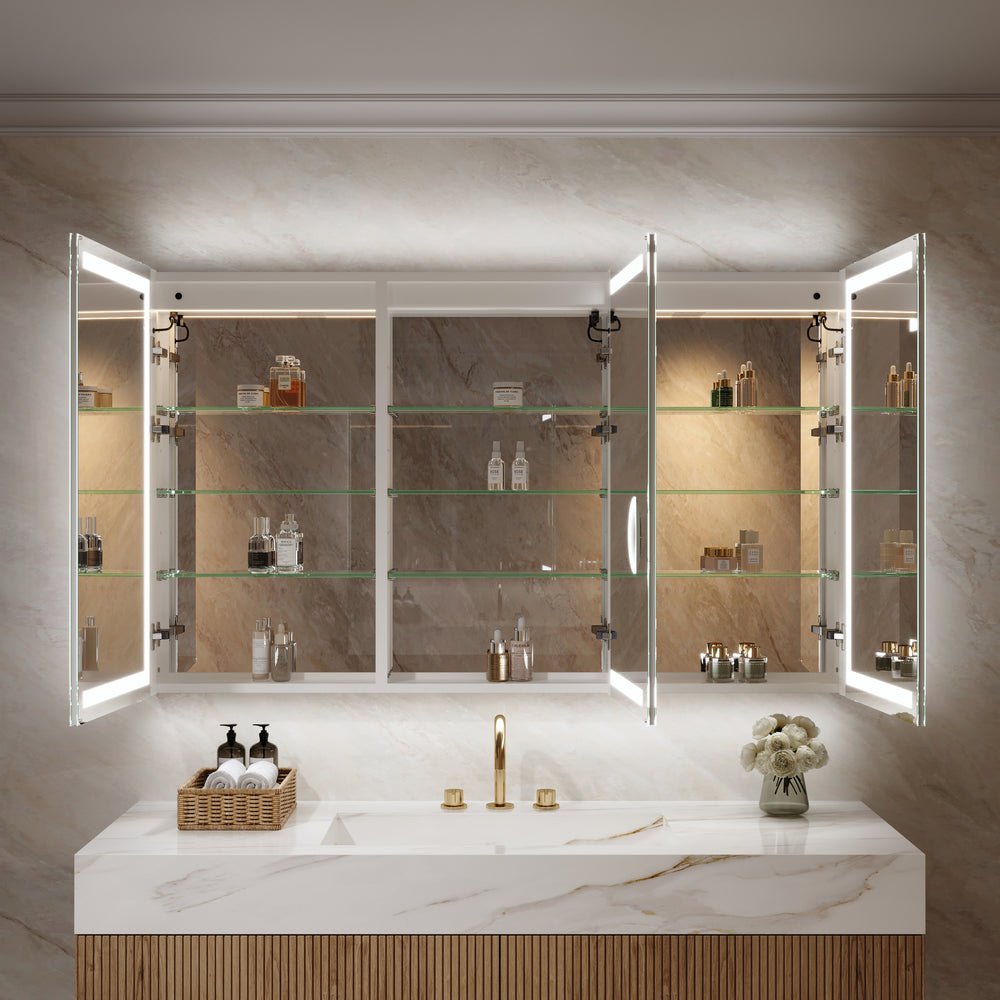
So, do these all-in-one units actually cut down on bathroom mess, or are they just another trendy fixture that gets overpromised? If you look closely at current home renovation shifts, the answer comes down to smart spatial flow, functional lighting, and intentional storage.
The Real Root of Visual Chaos
Why do vanity tops get so messy in the first place? It’s rarely because people have too much stuff; it’s usually because the stuff they use every single day has no natural, effortless home.
In a classic bathroom layout, you have a flat mirror on the wall, a vanity counter, and maybe a few deep drawers down below. The problem with lower drawers is friction. Nobody wants to bend down, pull open a heavy drawer, dig through a basket, and fish out a toothbrush while still half-awake at 6:30 AM. So, that toothbrush stays on the counter. The daily moisturizer stays on the counter. The razor stays on the counter. Before long, your sink area looks chaotic, no matter how often you wipe it down.
Medicine cabinets rewrite this physical dynamic by shifting storage directly to eye level, right behind the reflective glass.
When your daily essentials live six inches away from your hands, putting them away becomes second nature. You open the cabinet door, grab your serum, apply it, put it back, and shut the door. The visual noise vanishes instantly. Your guests see a sleek, spotless mirror surface, while all the personal clutter sits safely tucked out of sight.
The industry metrics back up this shift toward hidden utility. Recent data from Houzz shows that among homeowners choosing to upgrade their medicine cabinets, 64% opt for exterior mirror panels, while 36% request internal mirrors as well. On top of that, manufacturers are embedding practical tech straight into the frames: 22% of upgraded units now feature hidden internal power outlets, and 17% feature integrated defogging systems. The humble medicine cabinet isn’t just a wooden box anymore—it’s evolving into an essential, multifunctional workstation.
Why Integrated Lighting Moves the Needle
If hidden shelves answer the question of where to hide the mess, built-in LED lights answer the question of how to make the room actually functional.
Traditional bathroom lighting is notorious for creating problems. Most older homes rely on a single overhead ceiling light or a bar fixture mounted high above the mirror. These setups cast harsh downward shadows right across your face—making it tricky to apply makeup evenly, get a clean shave, or notice skincare details. To fix it, people used to add bulky side sconces, which ate up precious wall space and added more visual clutter to an already cramped room.
Integrated LED lighting changes that balance completely.
According to 2025 Houzz research, 22% of homeowners undergoing bathroom renovations picked illuminated mirrors, up 3 percentage points from the prior year. When looking specifically at medicine cabinets, 26% incorporated built-in exterior lighting, and 20% included interior cabinet lighting—both marking steady year-over-year gains.
From a practical standpoint, built-in LEDs flood your face with soft, balanced light from the front, removing dark shadows without needing extra light fixtures. If your bathroom is small or lacks natural windows, a lit cabinet consolidates three separate products—a mirror, a storage unit, and task lights—into one single footprint on the wall. Less hardware on the walls directly translates to a cleaner, calmer visual environment.
Consolidating Products for a Cleaner Footprint
The broader market trend is clear: people don’t want more furniture in their bathrooms. They want smarter products that do multiple jobs at once.
When one fixture covers three or four needs, you eliminate the need for separate side shelves, countertop organizer racks, and wall-mounted sconces. This footprint reduction is where brands like WELLFOR have found their stride.
WELLFOR has focused heavily on designing versatile LED medicine cabinet lineups that fit real-world layouts.
They offer both surface-mounted (for quick installations) and recessed-mounted designs (which sit flush with the drywall for an ultra-minimalist look). Their sizing ranges from compact 20-inch units up to expansive 60-inch triple-door setups, with popular middle-tier options like 24×30, 30×30, 36×30, and 48×30 inches.
Beyond sheer size, these modern models incorporate built-in defoggers, smooth touch dimming, hidden power plugs, and built-in 3X magnification mirrors. The main design intent here isn’t just adding cubic inches of storage space—it’s streamlining daily habits.
Hiding Stuff Isn’t Enough: Smart Organization Matters
It’s worth pointing out that a medicine cabinet won’t fix a messy bathroom if you just cram items inside randomly. Real organization requires a light touch and a bit of intent.
The most effective strategy is organizing by frequency of use:
Eye-Level Zones: Everyday essentials—toothbrushes, primary creams, face wash—belong on the middle shelves right at eye level.
Upper & Lower Zones: Prescription medications, backup stocks, and specialized tools belong higher up or toward the back.
Internal Outlets: Electric toothbrushes and beard trimmers can sit on interior charging pads behind closed doors, keeping messy charging cords off your quartz or granite counter completely.
When you remove charging cables and daily bottles from the sink perimeter, the transformation is immediate. You’re not just adding storage; you’re freeing up your mental bandwidth every time you walk into the room. In fact, Houzz surveys reveal that 59% of homeowners believe an organized storage system is the single biggest factor in making a renovated bathroom feel like a relaxing retreat.
The Verdict: From Simple Mirror to Spatial Hub
Bathroom trends tell a clear story: homeowners no longer treat mirrors as simple decorative glass. They expect them to work harder.
An LED-lighted medicine cabinet won’t magically cure bad habits or clean up after you. But by pulling daily clutter off flat surfaces, incorporating seamless task lighting, and organizing your morning essentials right behind the glass, it gives even the smallest bathroom a fighting chance at staying clean, open, and functional.