
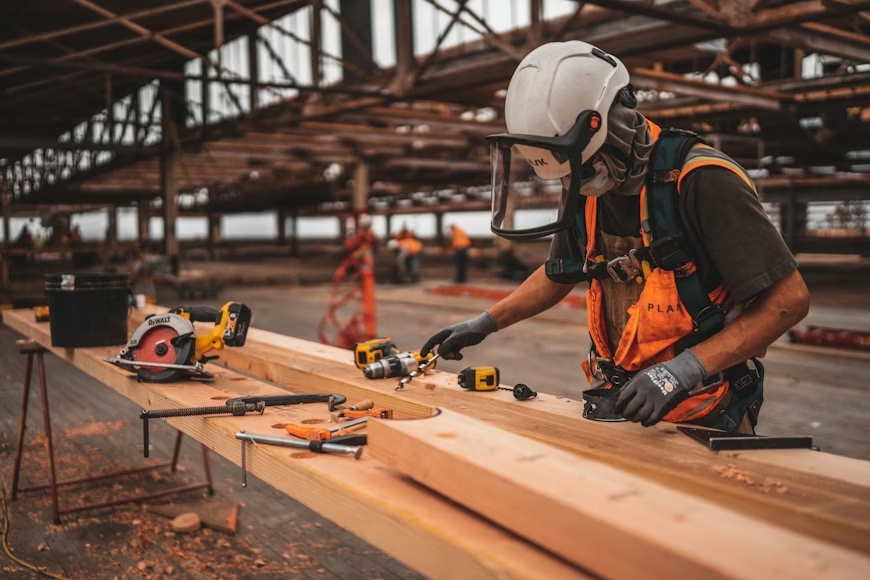
Need to stay compliant while keeping your crew safe?
Lifting jobs are dangerous. Keeping track of regulations is confusing at best.
But did you know…
Learning about OSHA lifting standards doesn’t have to be difficult.
Helping prevent deadly accidents on construction sites is the goal!
According to Bureau of Labor Statistics data, 43% of crane-related fatalities happened in the private construction sector. Crazy to think how many of those injuries could’ve been prevented by simply being compliant.
Fortunately,
Companies can reduce the number of accidents by following proper guidelines. Let’s dive into what you need to know about construction lifting regulations.
Table of Contents
- OSHA Lifting Standards Explained
- ASME B30.20 Below-the-Hook Requirements
- Areas of Focus When it Comes to Compliance
- Important Inspection Points
- Types of Violations Often Seen
OSHA Lifting Standards Explained
You don’t work in construction to see your crew get hurt.
OSHA lifting regulations were created to prevent avoidable accidents from happening.
They apply to everything related to lifting jobs. From crane requirements and operator certifications to rigging and below-the-hook lifting device standards.
But did you know OSHA isn’t the only set of standards to look at?
The safety organization frequently references American Society of Mechanical Engineers standards when writing their rules.
Specifically, ASME B30.20 below-the-hook lifting devices.
Our guide to ASME B30.20 OSHA lifting standards goes more in-depth on how the two sets of standards overlap.
Having knowledge on both will help you better understand construction lifting regulations.
ASME B30.20 Below-the-Hook Requirements
ASME B30.20 standard is specific to below-the-hook lifting devices.
Anything that physically connects your load to the hoist falls under the regulation.
Examples would be structural lifting devices, vacuum lifters, lifting magnets, grapples, and clamps.
This standard dictates how below-the-hook lifting devices should be marked. What they should be constructed of. Where they can be installed. How they should be inspected. Testing requirements. Maintenance requirements. You name it.
Let’s highlight a couple of key points below.
All below-the-hook lifting devices must be operated by qualified personnel. Each piece of equipment has frequent and periodic inspection requirements.
Two types of inspections exist:
- Frequent inspections
- Periodic inspections
Frequent inspections are visual inspections that need to occur before each shift. Periodic inspections are in-depth examinations of all components. These need to happen at least once a year.
The periodic inspection interval can be less than a year. It just depends on how often the device is used and what environment it’s being used in.
For example, if your equipment is used daily in a harsh environment. Your periodic inspections will need to be more frequent than equipment used weekly in a climate-controlled environment.
Areas of Focus When it Comes to Compliance
Did you know OSHA lifting regulations cover numerous categories?
Of course they do. We’re talking about multiple different areas needing oversight here.
Not taking care of any one of these areas could result in serious injury or death to your crew.
Let’s take a look at a few of these key areas.
Operator’s Certification
All operators need to be certified under 29 CFR 1926 Subpart CC.
No cranes. No operating. Period.
Operators need to prove their qualifications match up to the specific crane they will be using. This means passing a written test and a hands-on evaluation.
Load Rating
Each lifting device needs to have the rated load visibly marked.
This isn’t a suggestion. If you start rigging loads that exceed the manufacturer’s recommended capacity. You’re asking for a failure.
As always, a load chart should be consulted prior to lifting. Length, angle, and radius matter. These charts take into consideration each of those aspects.
Ground Conditions
Supervisors are responsible for ensuring ground conditions can properly support crane operations.
If the ground surface is soft or uneven. The likelihood of tip-over and collapse increase dramatically.
Ground surfaces should be evaluated prior to each lift. Do the outriggers have solid footing? Do I need to add mats to support the crane?
Power Lines
Maintain 20-foot clearance from all power lines.
It’s that simple. Don’t take chances when working near power lines. Most crane fatalities are caused by contacting energized power lines.
Assume they are live until the power company tells you otherwise.
Inspecting Equipment
Performing frequent and periodic inspections are required by law.
Not only that, but they help to ensure you aren’t about to use damaged equipment.
Inspecting your lifting devices before each use is covered under ASME B30.20. Things to look for include:
- No obvious damage to lifting hooks, slings, eyebolts, etc.
- Load surfaces clear of oil, debris, etc.
- All operating controls function properly
- All indicator lights work
Periodic inspections dive much deeper than that. Component connections, mechanical systems, and electrical systems should be tested.
Periodic inspections should be documented. That way you have records to show you were in compliance should OSHA decide to audit.
Keep in mind…
If you’re using lifting devices in a harsh environment. Such as saltwater operations, extreme temperatures, or heavy-duty cycle usage.
Your equipment should be inspected more frequently than every 12 months.
Equipment Manufacturer
Your equipment should always be craned manufactured.
Yes, you can make your own rigging equipment. But your below-the-hook lifting devices should be from a trusted crane manufacturer.
When investing in your lifting devices make sure they come from a reputable company.
Important Inspection Points
Inspections are obviously important.
But did you know there’s a correct and incorrect way to go about them?
The last thing you want is to skip a piece of damaged equipment thinking you’ve done a thorough inspection only to have it fail and injure one of your employees.
OSHA General Safety Requirements state that damaged equipment should be immediately removed from service.
We recommend going through a quick inspection checklist before every lift.
A few things to look for:
Types of Violations Often Seen
Even if you’re doing your best to stay compliant. Mistakes happen.
OSHA has seen it all when it comes to safety violations.
Reviewing some of these can help you identify areas your company could be falling short.
Top violations include:
- Missing or illegible load rating
- No documentation that equipment was inspected
- Use of unqualified operators
- Improper sling angles
- Failure to use a signal person
According to research, human error is the cause of 90% of crane accidents.
When digging deeper you’ll find that lack of training, failure to follow proper procedures, and poor communication are to blame for most of these accidents.
The majority of accidents are preventable.
If your company invests in proper training programs, reinforces frequent inspections, and maintains equipment to ASME B30.20 standards.
You can reduce lifting related accidents by a significant amount.
Wrapping Things Up
Safety regulations aren’t put into place to make your job more difficult.
OSHA lifting standards and ASME B30.20 were designed to prevent injuries on construction sites.
If every company followed guidelines every accident could be avoided.
Let’s review:
- OSHA references ASME B30.20 standards when writing regulations for below-the-hook lifting devices.
- Crane operators must be certified/qualified to operate.
- Frequent and annual inspections are required by OSHA standards.
- Damaged equipment should be taken out-of-service.
- Training can eliminate the majority of lifting accidents.
Lifting accidents are never 100% someone else’s fault.
If you or your crew were injured while lifting on the job. Someone didn’t follow a procedure.
Take every precaution necessary to ensure the safety of your crew.
You only get to hire once.
Work hard to keep your employees happy and safe.
They’ll return the favor by treating your equipment like it’s their own.