
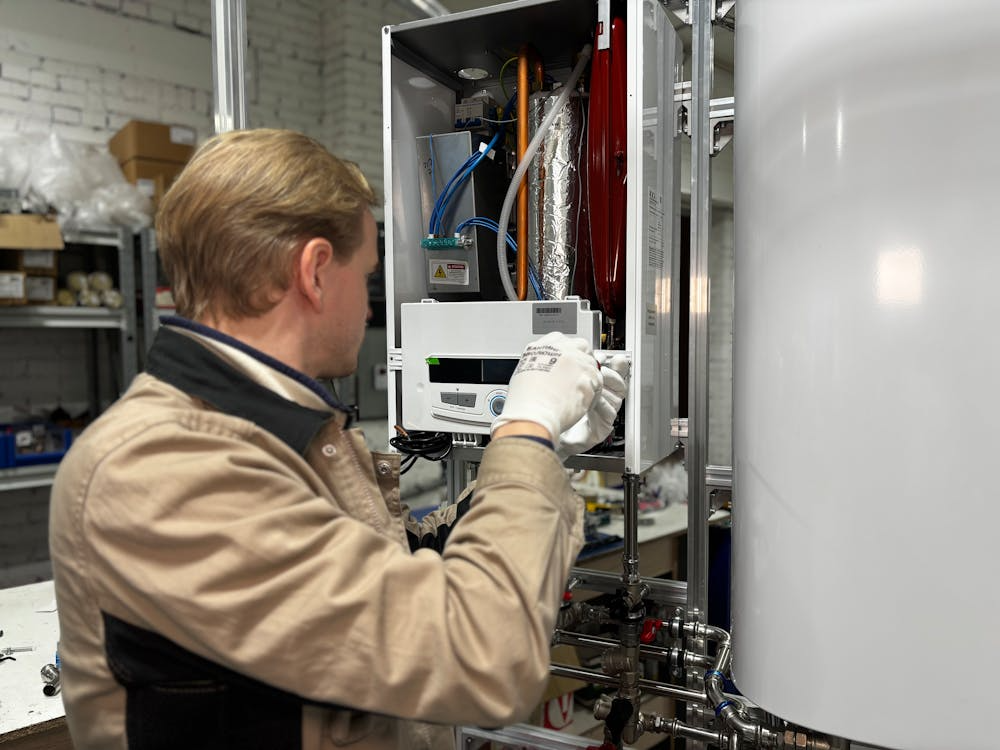
Want to slash heating costs while building a greener commercial property?
Green heating is not just trendy these days. It is quickly becoming the norm for new commercial construction. And with energy costs increasing annually smart developers should:
- Lower operating costs
- Better tenant retention
- Stronger ESG credentials
Here’s the good news…
Building an energy efficient heating system doesn’t have to cost you a fortune. Here are proven ways that work on today’s commercial construction.
Inside This Guide:
- Why Sustainable Heating Matters Right Now
- The Top Sustainable Heating Strategies
- Why Leak Detection Should Top Your Checklist
- Smart Controls That Save You Money
Why Sustainable Heating Matters Right Now
Heating eats up a massive chunk of every commercial building’s energy bill.
Did you know that nearly 32% of all U.S. commercial building energy use goes towards space heating? That’s a massive portion of your operating budget going straight up the chimney each winter. And when you multiply that by the number of floors in your commercial properties, it really adds up.
Sustainable heating solutions address this problem at its source. When developers plan effective systems from the outset they can:
- Cut energy costs — sometimes by 30-50% over the building’s lifetime
- Reduce carbon emissions — meeting modern ESG and code requirements
- Boost tenant satisfaction — comfortable buildings keep tenants happy
- Future-proof the property — energy regulations are only getting stricter
Bring in an expert from a trusted commercial heating company to help you get the design right from day one. They should know current construction codes, leak detection requirements and high efficiency equipment options. You can’t beat that experience.
Now onto the actual strategies…
Use High-Efficiency Boilers and Heat Pumps
The heart of every great commercial heating system?
High-efficiency equipment.
Traditional boilers have an efficiency limit of about 80%. Condensing boilers can achieve efficiencies of 95%+ by utilizing heat from flue gases that would otherwise be wasted by traditional boilers.
Even better? Commercial heat pumps.
Heat pumps don’t create heat, they transfer it. This allows them to be up to 4x more efficient than conventional heating. Plus they can cool your home in the summer too, so you get double the benefits.
Here’s a quick breakdown of the best options:
- Condensing boilers — Great for legacy retrofits and large commercial buildings
- Air-source heat pumps — Best for moderate climates and mixed-use developments
- Ground-source heat pumps — Highest efficiency but higher upfront costs
- Hybrid systems — Combine heat pumps with gas boilers for backup redundancy
Pretty cool, right?
Optimise Building Insulation and Envelope Design
You can install the fanciest heat pump on the market…
But if the building leaks heat like a sieve, the savings disappear overnight.
Ok so here’s the scoop: Insulation is by far the least expensive and simplest method of decreasing heating loads. The majority of commercial buildings still lose a significant amount of heat through:
- Roofs
- Walls
- Windows
- Doors and loading bays
Install higher performance insulation, triple-pane windows and air-sealed construction. Outcome: smaller boilers, reduced operating expenses and comfortable tenants year-round.
It’s a no-brainer.
Why Leak Detection Should Top Your Checklist
Now here’s something most builders overlook…
Leak detection.
Thermal hydronic heating systems circulate thousands of gallons of hot water through miles of pipe. A tiny leak isn’t just a drop in the bucket – it’s an energy catastrophe.
Why?
Because every gallon of hot water lost to a leak has to be:
- Replaced with cold water
- Heated back up to operating temperature
- Pumped through the system again
And what’s the worst that could happen? Buried leaks cause extensive water damage. The average commercial water damage claim runs around $24,000. That’s a devastating blow to operating budgets that could have been avoided with early leak detection.
Modern leak detection systems include:
- Spot sensors — Placed at high-risk points like boiler rooms and mechanical closets
- Rope sensors — Run along pipe lengths to cover wider zones
- Pressure monitoring — Tracks system pressure for slow developing leaks
- Makeup water monitoring — Flags abnormal water additions in closed loops
Best of all? Many of these leak detection systems can connect to your building automation system. Meaning you can receive real-time alerts when a problem occurs.
Listen up… Make leak detection part of the design upfront. It’s 3-5x more expensive to add it later.
Integrate Smart Controls and Building Automation
The secret weapon of sustainable heating?
Smart controls.
Legacy commercial heating systems run 24/7 regardless if heat is needed or not. It’s like idling your car at 60 mph in the driveway. Ridiculous.
Modern smart controls flip this on its head by:
- Adjusting heat output based on real-time occupancy
- Learning the building’s heating patterns over time
- Pre-heating zones before tenants arrive
- Shutting down unused areas automatically
These systems often pay for themselves in 2-3 years through energy savings alone.
Pair zoning with smart controls. Zoning allows different areas of the building to be controlled independently. Couple that with smart controls and you only heat the areas that are in use. This one tip can reduce your heating costs by 20-30%.
Use Renewable Energy Sources
Want to take heating sustainability to the next level?
Renewable energy.
Solar thermal systems can also preheat water for use in hydronic heating systems, lessening the load on boilers. Solar thermal systems can meet 60% of annual demand for hot water in some climates. Wow.
Other renewable options worth exploring:
- Geothermal systems — Tap into stable underground temperatures
- Biomass boilers — Use wood pellets or agricultural waste
- Waste heat recovery — Capture heat from refrigeration, IT equipment, or industrial processes
Renewables combined with heat pumps and intelligent controls can deliver near-zero emissions heating.
Better for the planet, better for the bottom line.
Plan for Regular Maintenance From Day One
Even the best heating system fails without proper maintenance.
Build maintenance access into the design. Make sure mechanical rooms have:
- Enough space for technicians to work safely
- Clear access to all valves and sensors
- Proper drainage in case of leaks
- Good lighting and ventilation
Include a budget for preventative maintenance contracts with a professional commercial heating company. Ongoing inspections, leak checks and system tuning increase longevity and maintain optimal efficiency throughout the life of the building.
Bringing It All Together
Sustainable heating in commercial construction isn’t optional anymore — it’s a must-have.
The strategies above work because they:
- Cut operating costs significantly
- Improve tenant comfort
- Future-proof the property
Begin with high efficiency equipment, tighten the envelope, fix leaks and add controls. Then layer on renewables where appropriate.
Truthfully planning is what allows you to get all of these things done. Don’t try to go at it alone. Work with professional engineers, contractors and commercial heating specialists that have been there and done that.
Office buildings that do this well today will own the commercial real estate industry for the next three decades.